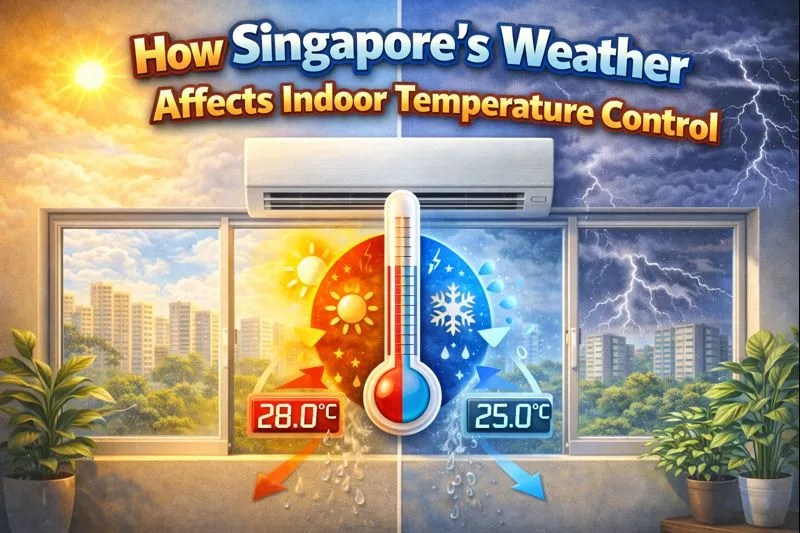
Singapore’s Weather plays a direct role in Indoor Temperature and Indoor Cooling across homes, offices, and commercial buildings. The country sits close to the equator, which means heat, moisture, and steady sunlight shape daily indoor conditions. People often rely on cooling systems to keep indoor spaces comfortable. To manage Indoor Temperature well, it helps to understand how local weather patterns affect heat flow, air movement, and moisture levels inside buildings.
Overview of Singapore’s Climate and Daily Weather Patterns
Singapore has a tropical climate with high heat and humidity throughout the year. The average outdoor temperature stays between 77°F and 91°F. Daytime heat builds fast because the sun stays high in the sky. Nights remain warm because the land and buildings release heat slowly.
Rain falls often, with heavier showers during monsoon seasons. Cloud cover can lower outdoor heat for short periods, but moisture in the air stays high. This mix of heat and humidity affects how fast indoor spaces warm up and how hard cooling systems must work. Buildings absorb heat during the day and release it at night, which keeps Indoor Temperature high even after sunset.
Because seasons do not change much, people face similar Indoor Cooling needs all year. Cooling systems run daily, not just during a short summer period. This steady demand shapes building design, energy use, and comfort planning.
How Heat Transfer Raises Indoor Temperature
Heat moves from outdoors to indoors through walls, roofs, windows, and doors. In Singapore’s Weather, strong sunlight heats building surfaces for many hours. Roofs receive direct sun and become major heat sources. Walls also gain heat, especially those facing east and west.
Once heat enters a building, it raises Indoor Temperature fast. Concrete and brick store heat and release it slowly. This process keeps indoor spaces warm even after outdoor temperatures drop slightly. Poor insulation allows more heat to pass through surfaces, which increases the load on Indoor Cooling systems.
Glass windows also affect Indoor Temperature. Clear glass allows sunlight to enter, which warms floors and furniture. This effect raises indoor heat levels during the day. Shaded or treated glass can reduce this heat gain, but many buildings still use standard glass that passes a large amount of solar heat.
The Role of Humidity in Indoor Comfort
Humidity plays a key role in how people feel indoors. Singapore’s Weather brings high moisture levels almost every day. Humid air holds more heat and slows sweat evaporation from the skin. As a result, people feel warmer even when Indoor Temperature stays at a moderate level.
High humidity also affects Indoor Cooling systems. Air conditioners must remove moisture as well as heat. This process uses more energy and time. If a system fails to control humidity well, indoor spaces may feel sticky and uncomfortable.
Moist air can also affect furniture, electronics, and building materials. Wood can swell, and metal can corrode. These effects do not change Indoor Temperature directly, but they influence how long cooling systems must run to keep air dry and comfortable.
Impact of Monsoon Seasons on Indoor Temperature
Singapore experiences two main monsoon seasons. The Northeast Monsoon brings steady rain and strong winds, while the Southwest Monsoon causes scattered showers and warm air. Rain can briefly reduce outdoor temperatures, but humidity levels stay high throughout the day. During these conditions, indoor spaces often feel damp, making consistent cooling and moisture control important. This is why aircon servicing in SG plays a key role during the monsoon period, as regular maintenance helps systems manage humidity, support airflow, and maintain stable indoor comfort even when weather patterns shift.
On rainy days, thick cloud cover blocks sunlight and slows direct heat buildup inside buildings. Indoor temperatures may rise at a slower pace, but moisture in the air often increases. Without proper system performance, this added humidity can reduce comfort and affect air quality. Cooling systems still need to operate efficiently to balance temperature control and moisture removal during prolonged wet weather.
Wind during monsoon periods can help natural ventilation in some buildings. Open layouts and well-placed windows can allow air movement that removes heat. Still, many modern buildings rely on sealed designs, which limit natural airflow and increase reliance on Indoor Cooling systems.
Building Design and Its Response to Singapore’s Weather
Building design shapes how Indoor Temperature responds to outdoor heat. In Singapore, many buildings use concrete because it lasts long and handles moisture well. Concrete stores heat, which can raise indoor warmth during the evening and night.
Roof design matters a lot. Flat roofs with dark surfaces absorb more heat. Light-colored or reflective roofs reduce heat gain. Green roofs with plants can also lower roof temperature by shading surfaces and releasing moisture into the air.
Window placement affects sunlight entry. Large windows increase natural light but also raise indoor heat. Shading devices like overhangs and screens can block direct sun while still allowing daylight. These features help control Indoor Temperature without heavy reliance on cooling equipment.
Indoor Cooling Systems and Constant Heat Load
Indoor Cooling remains essential in Singapore because outdoor heat stays high every day. Air conditioning systems often run for long hours. This constant use increases energy demand and affects system lifespan.
Split air conditioners serve homes and small offices, while central systems serve large buildings. These systems must handle both heat and moisture removal. When outdoor humidity rises, systems work harder to dry the air before lowering temperature.
Proper sizing of cooling systems matters. Undersized units struggle to control Indoor Temperature, while oversized units cycle on and off too often. This cycling can reduce moisture removal and cause uneven cooling.
Energy Use and Indoor Temperature Control
Energy use links closely with Indoor Cooling in Singapore. Cooling accounts for a large share of electricity consumption. High outdoor heat means systems must remove more heat from indoor spaces.
Poor insulation, air leaks, and direct sunlight increase energy use. Simple changes like sealing gaps, adding insulation, and using curtains can reduce heat gain. These steps help maintain stable Indoor Temperature with less energy.
Smart controls also help manage cooling. Timers and sensors adjust system operation based on room use and time of day. These tools prevent overcooling and reduce energy waste while keeping indoor spaces comfortable.
The Effect of Urban Density on Indoor Temperature
Urban density affects local climate and Indoor Temperature. Tall buildings, roads, and limited green spaces create heat islands. These areas stay warmer than nearby regions with more plants and open land.
Heat islands raise outdoor temperatures, which then increase indoor heat gain. Buildings close together block wind flow, which reduces natural cooling. As a result, Indoor Cooling systems must work harder.
Adding trees, rooftop gardens, and open spaces can lower local heat. These features reduce surface temperatures and improve airflow. Over time, such changes can help stabilize Indoor Temperature across dense areas.
Ventilation and Airflow in Indoor Spaces
Ventilation affects how heat and moisture move indoors. Natural ventilation uses windows and openings to allow fresh air to enter and warm air to exit. In Singapore’s Weather, natural ventilation works best during cooler hours or windy periods.
Mechanical ventilation uses fans and ducts to move air. These systems help remove heat and moisture, especially in sealed buildings. Good airflow supports Indoor Cooling by spreading cool air evenly.
Poor ventilation traps heat and moisture, which raises Indoor Temperature and reduces comfort. Regular maintenance of vents and filters ensures steady airflow and better cooling performance.
Materials and Furnishings That Affect Indoor Temperature
Interior materials affect how heat stays in a room. Dark surfaces absorb more heat, while light surfaces reflect it. Heavy furniture can store heat and release it slowly.
Curtains, carpets, and wall coverings can reduce heat transfer from windows and walls. These items help stabilize Indoor Temperature by limiting direct heat flow into living areas.
Choosing materials that resist moisture also helps in Singapore’s humid climate. Such materials reduce mold growth and support better indoor air quality, which improves comfort during cooling.
Human Activity and Heat Generation Indoors
People and appliances add heat to indoor spaces. Cooking, lighting, and electronics release heat during use. In Singapore’s Weather, this extra heat adds to the already high outdoor load.
Crowded spaces warm up faster due to body heat. Offices, shops, and public areas often require stronger Indoor Cooling to manage this added warmth.
Using energy-efficient appliances can reduce indoor heat generation. LED lights, for example, produce less heat than traditional bulbs. These choices help control Indoor Temperature without extra cooling effort.
Managing Indoor Temperature for Daily Comfort
Daily habits affect Indoor Temperature control. Closing curtains during peak sun hours reduces heat gain. Using fans can improve comfort by moving air across the skin.
Setting air conditioners to moderate levels saves energy and reduces strain on systems. Very low settings increase energy use without major comfort gains.
Regular maintenance of cooling systems keeps performance steady. Clean filters and coils improve heat and moisture removal, which helps maintain stable Indoor Temperature.
Long-Term Planning for Indoor Cooling in Singapore
Long-term planning helps manage Indoor Cooling needs under Singapore’s Weather conditions. Builders and planners now focus on designs that reduce heat gain and support airflow.
Energy codes and building standards encourage better insulation and efficient cooling systems. These measures aim to lower energy use while maintaining comfort.
As urban areas grow, managing heat becomes more important. Thoughtful design, efficient systems, and smart habits all support better Indoor Temperature control in a hot and humid climate.
Conclusion
Singapore’s Weather shapes Indoor Temperature and Indoor Cooling needs every day. High heat, strong sunlight, and steady humidity create constant pressure on indoor spaces. Heat transfer through building surfaces, moisture in the air, and urban density all raise indoor warmth.
Effective Indoor Temperature control depends on building design, cooling systems, ventilation, and daily habits. By understanding how local weather affects indoor conditions, people can make choices that improve comfort and reduce energy use. Clear planning and smart use of cooling systems help indoor spaces stay comfortable in a warm tropical climate.
 Daily Digest Headlines